Material Characteristics
The degree to which materials are capable of being influenced by a magnetic field varies greatly from material to material, however, they fall into three specific categories defined by their behaviour in the magnetic field.
Diamagnetic materials
These are repelled by a magnetic field and therefore cannot be magnetised. They include copper, titanium and most non-metals. Diamagnetic materials cannot be tested by Magnetic Particle Testing.
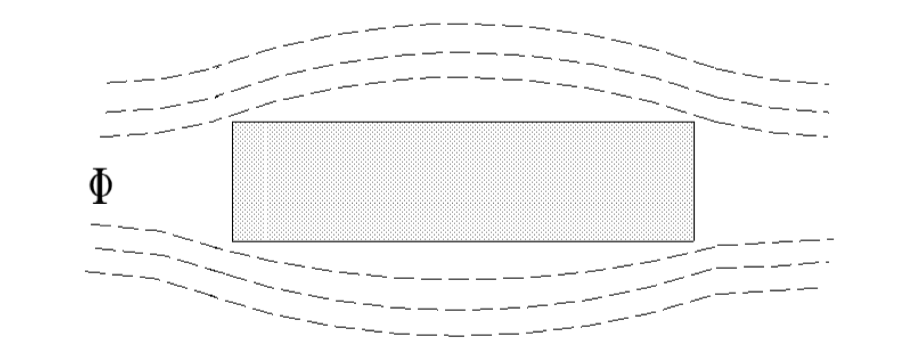
Examples of permeability in Diamagnetic materials:
- Gold – 0.999964µ
- Silver – 0.99998µ
- Copper – 0.999991µ
- Lead – 0.999983µ
- Bismuth – 0.99983µ
(Due to possessing permeability values of less than 1 these materials exhibit a macroscopic field in opposition to the applied field)
Paramagnetic materials
These are very weakly attracted by a magnetic field and include oxygen and most metals including austenitic stainless steel, magnesium, molybdenum, platinum, lithium and tantalum. Paramagnetic materials cannot be tested by Magnetic Particle Testing.
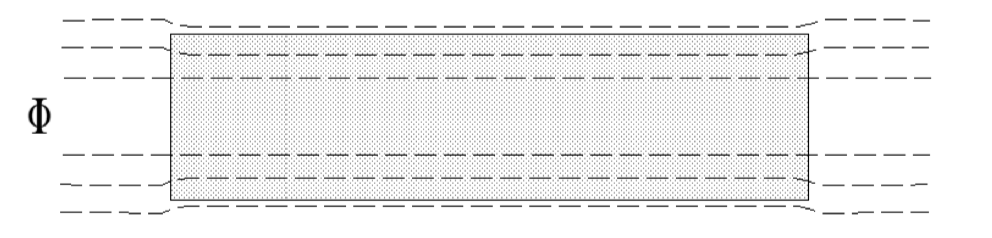
Examples of permeability in Paramagnetic materials:
- Air = 1.00000036µ (to the nearest decimal 1.0)
- Aluminium = 1.000021µ
- Magnesium = 1.000012µ
(Due to permeability values just above 1 these materials exhibit a macroscopic field in the same direction as the applied field, but the domains will instantly revert back to the haphazard directions when the field is removed)
Ferromagnetic materials
These are strongly attracted by a magnetic field and include iron, cobalt, nickel and many of their alloys. They also exhibit permanent magnetism and can themselves be magnetised. As a result, these are the only materials which can be tested with Magnetic Particle Testing.
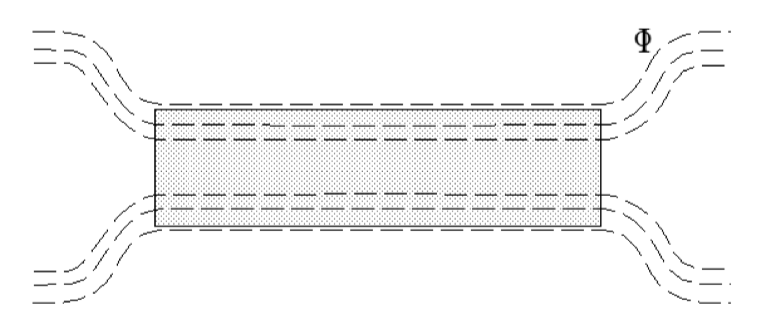
Examples of permeability in Ferromagnetic materials:
- Cobalt – 250µ
- Nickel – 600µ
- Annealed iron – 6000µ
- 0.9% carbon steel – 100µ
- Super malloy – 1 x 10⁶ µ
- Cold rolled iron – 2000µ
- MU alloy = 80,000µ
Note: BS EN ISO 9934-1 has based the magnetising values on assuming a permeability of 240.